My Contribution
Trove is a consumer film-tracking product that I designed and built on my own, end to end. As the sole contributor, I owned every part of it: the concept, information architecture, visual system, front end, data pipeline, and deployment.
A working product was in production within two weeks, and I have continued shipping features since. Along the way I rebuilt it from a single-user site into a hosted app for many users, complete with accounts, sign-in, free and paid tiers, and a behind-the-scenes queue for work that relies on outside data services.
The Problem
- Most film trackers record what you have watched, but not how it adds up
- There is no easy way to see how much of a director’s, writer’s, or actor’s body of work you have seen
- Film credit data is enormous, with tens of thousands of films and hundreds of thousands of credits to connect
- Free tiers often feel stripped down, giving people little reason to stick around
The Solution
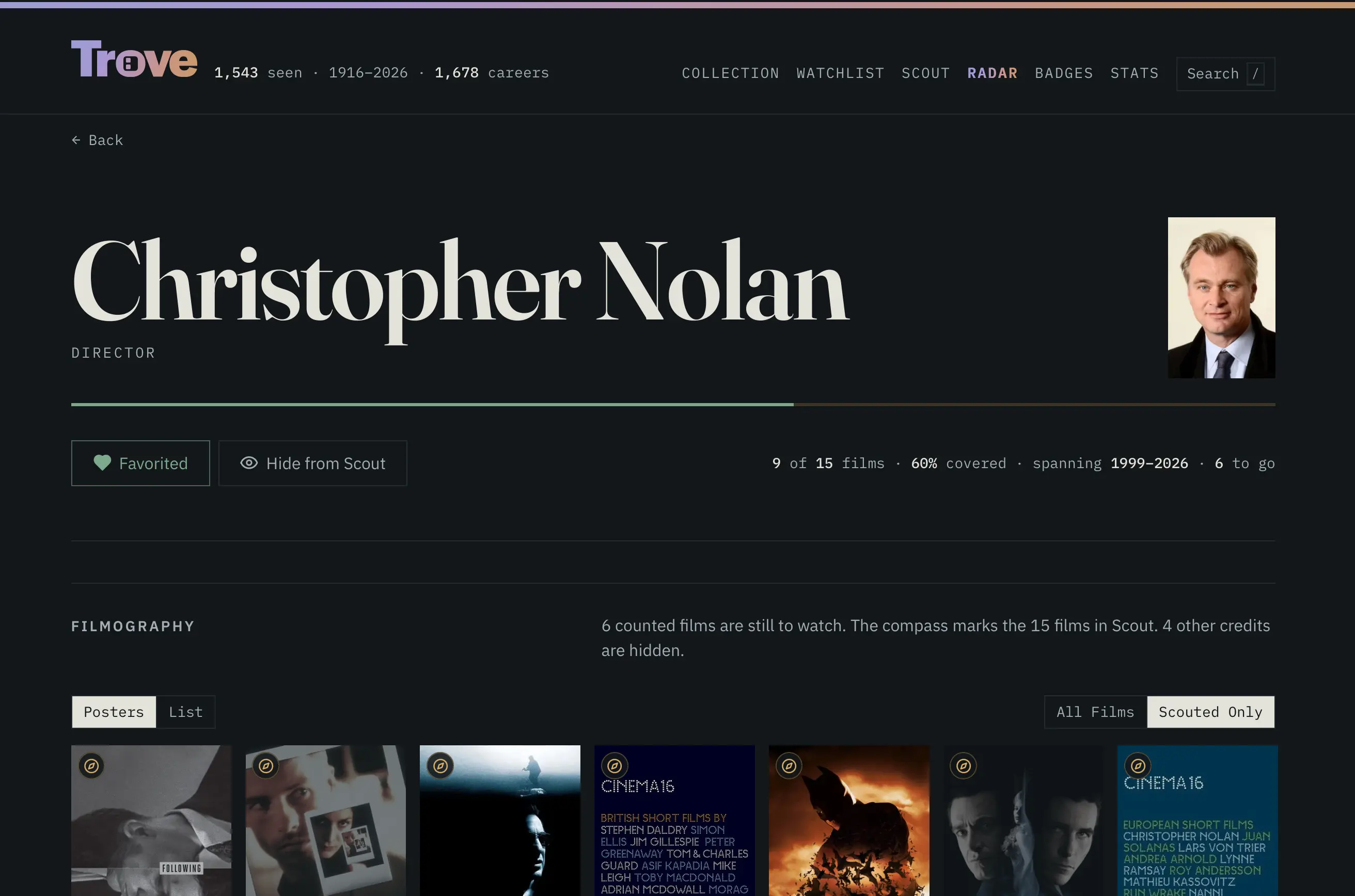
- A completion engine over a 46K-film, 540K-credit catalog that shows how much of any filmmaker’s work you have seen
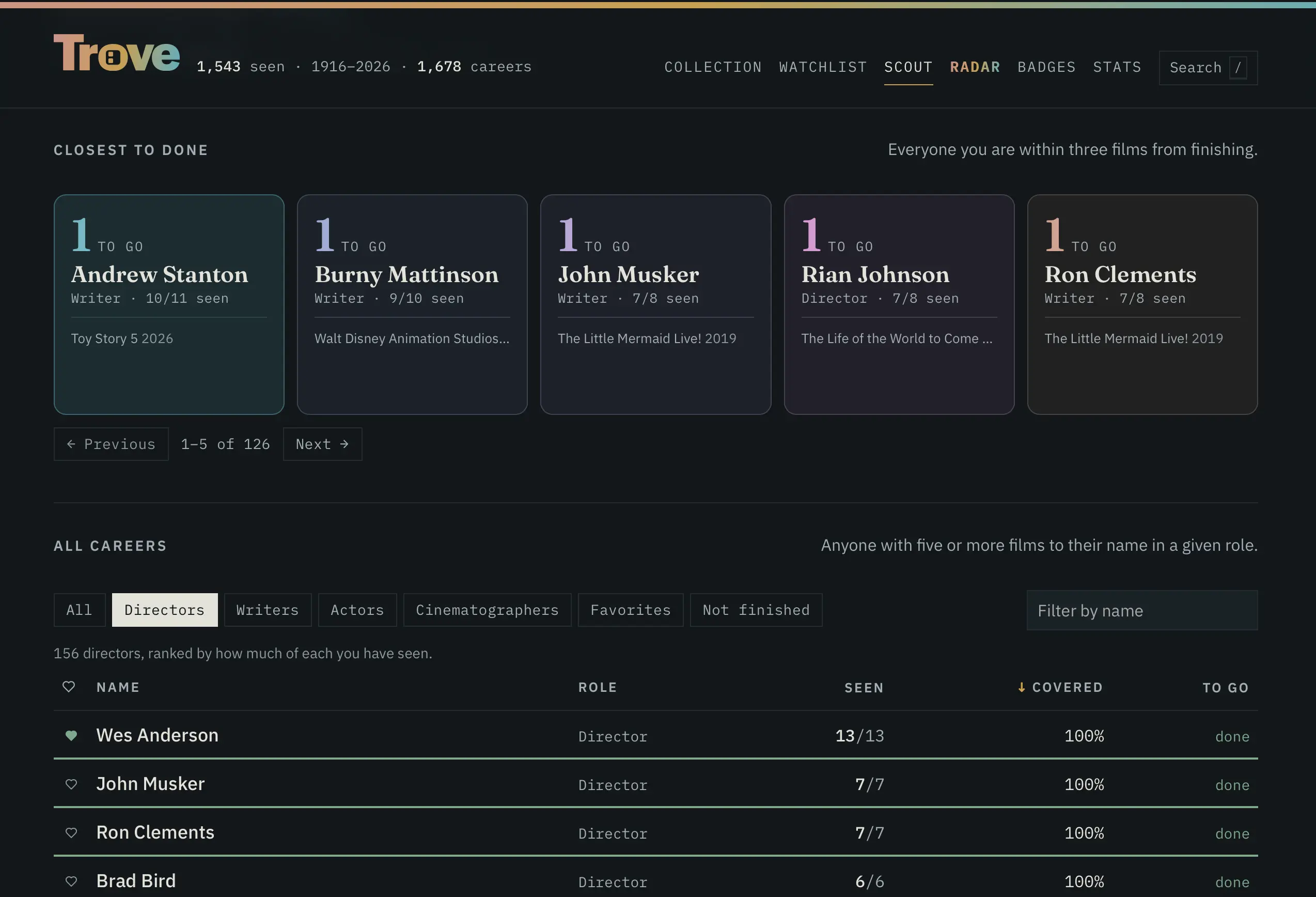
- Scout ranks careers by how much you have seen and highlights the people you are closest to finishing
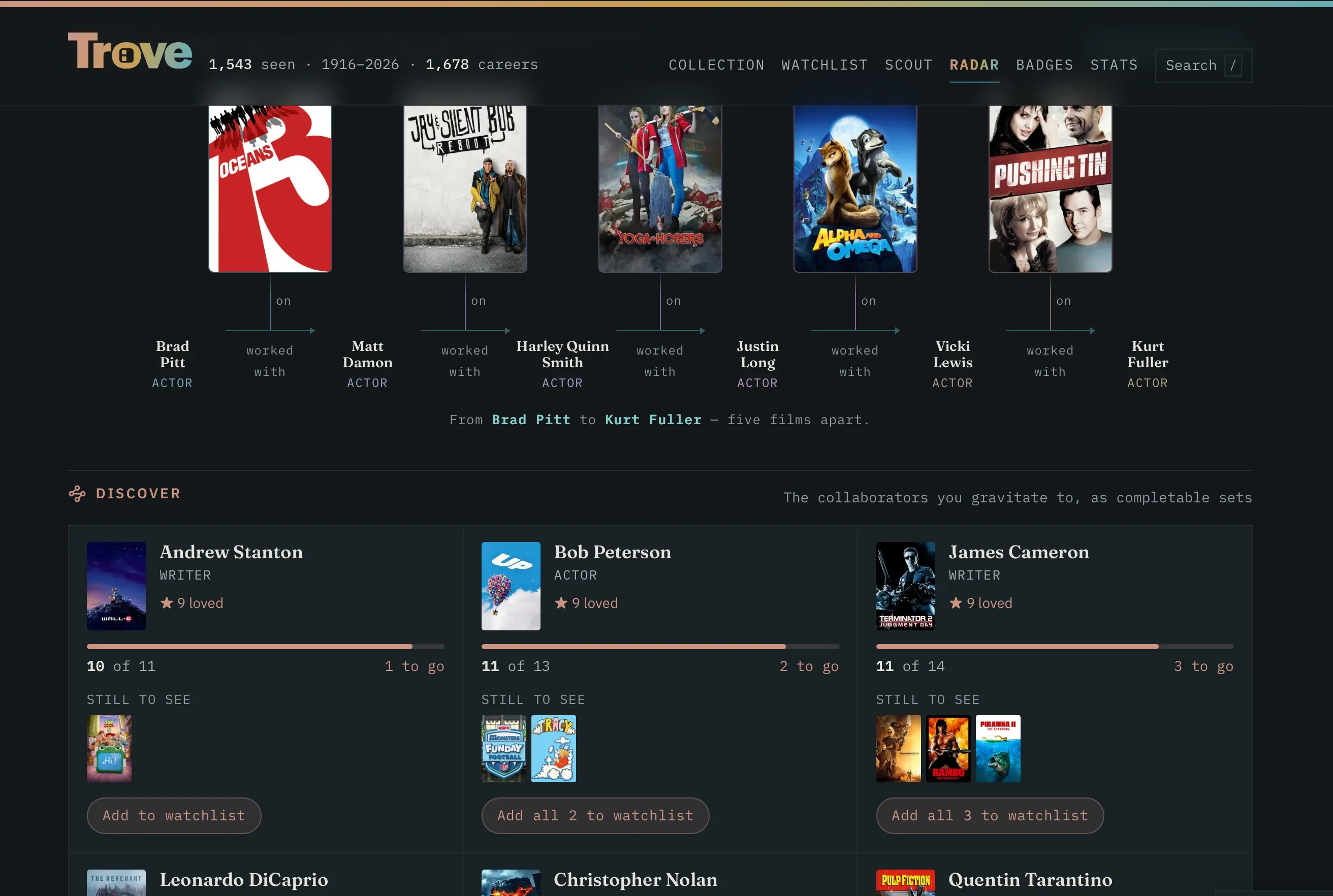
- Radar connects any two people through the films they worked on and turns favorite collaborators into sets you can complete
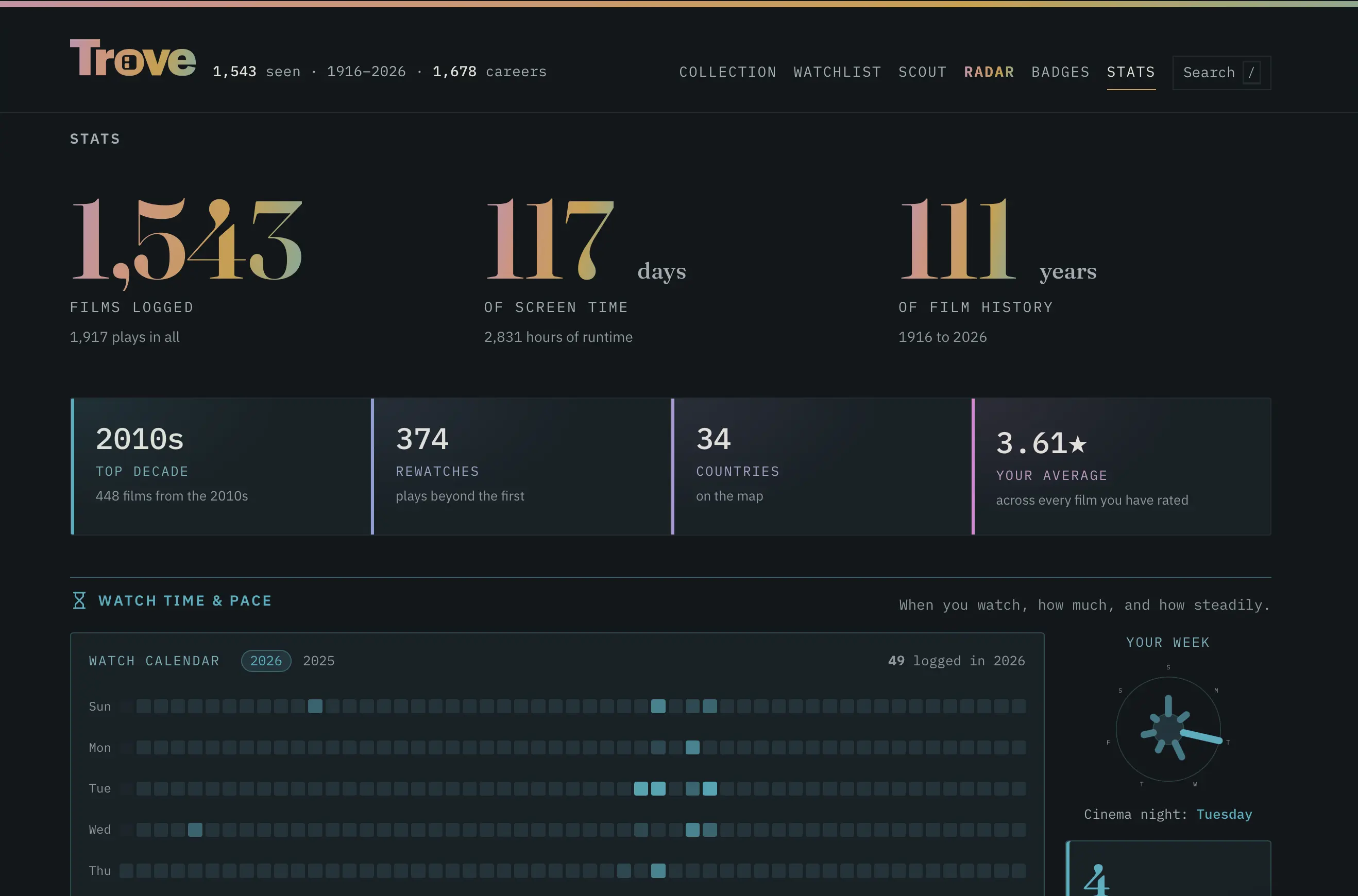
- A badge progression ladder and tiered stats designed to keep the free tier genuinely useful
The Story
Trove started with a simple question: how much of a filmmaker’s work have I actually seen? I began building it in July 2026 as a solo project, and within two weeks it was live in production.
The core idea is completion. Every film in the catalog is connected to the people who made it, so logging a single movie updates your progress across every director, writer, actor, and cinematographer involved. A list of titles becomes a map of your viewing life, and every career becomes something you can finish.
Trove is organized around a handful of focused views:
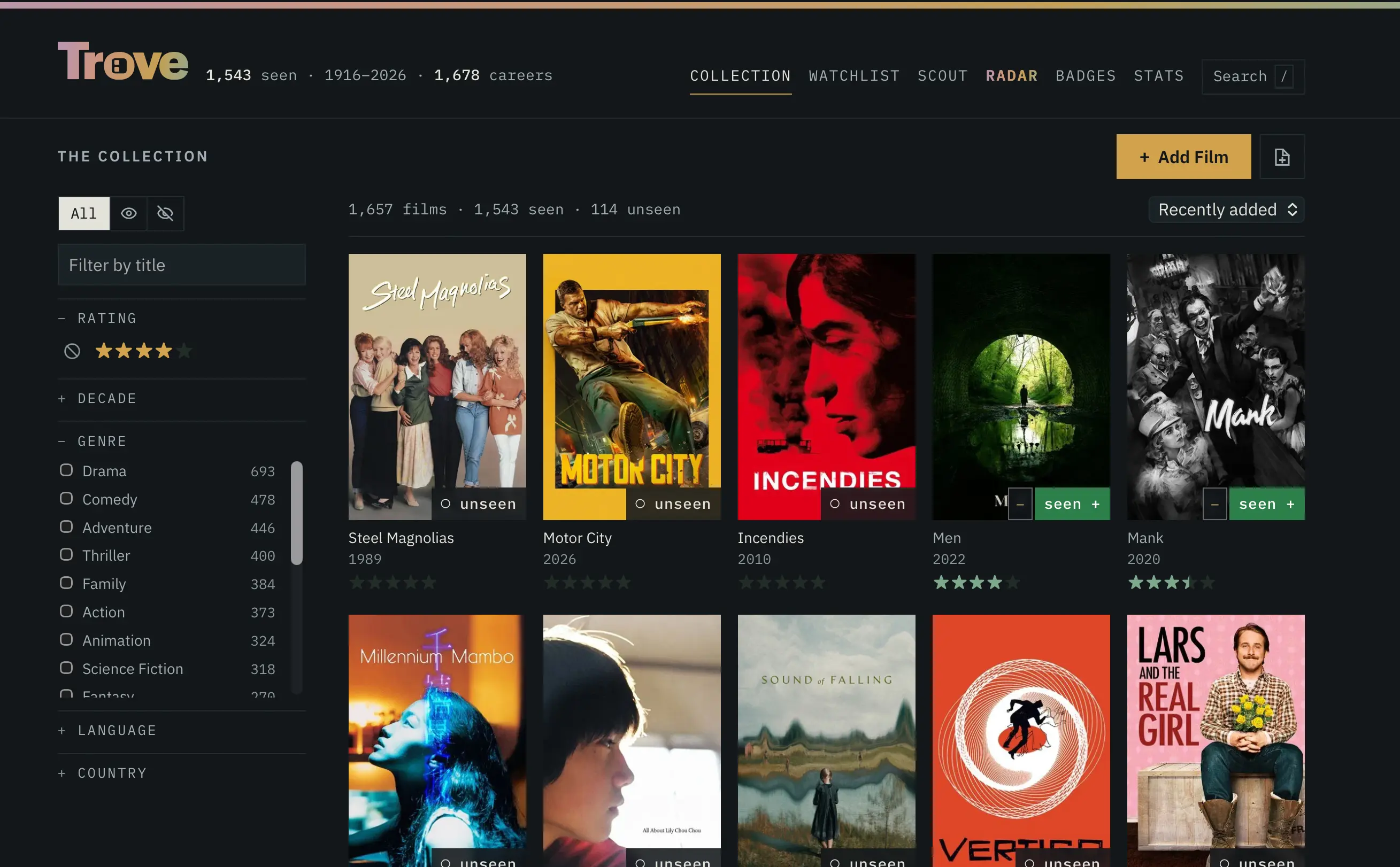
- Collection: every film you have logged, filterable by rating, decade, genre, language, and country
- Watchlist: the films you plan to see next
- Scout: careers ranked by how much you have seen, with the closest to done up top
- Radar: the connections between people and the collaborators you gravitate toward
- Badges: a progression ladder that rewards viewing milestones
- Stats: tiered insights into your viewing habits
As the product grew, it outgrew its single-user beginnings. I moved it to hosted, pay-as-you-go cloud infrastructure with a Postgres database, added accounts, secure sign-in, and free and paid plans, and set up a queue for work that depends on outside data services. I then measured performance and built a scaling plan validated to 10,000 users.